
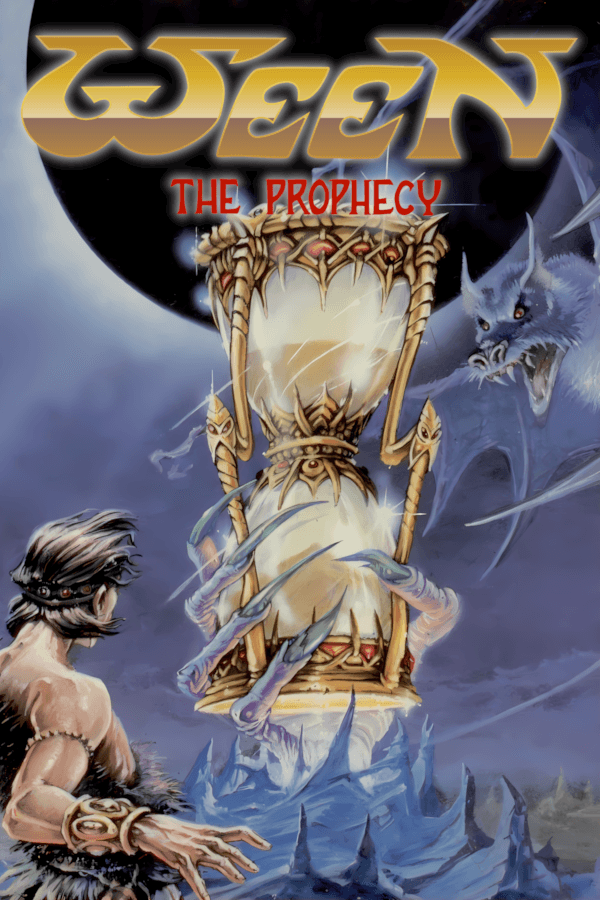

Playing Ween: The Prophecy feels less like exploring a vast fantasy kingdom and more like tackling a series of densely packed, screen-by-screen puzzle boxes, where every item in your satchel exists to solve a single hyper-specific problem.
Most adventure games from 1992 wanted you to walk across entire continents, but Ween: The Prophecy locks you inside tight, isolated scenes. Armed with a wand, an eye, and a hand icon, you play a young hero sent by your grandfather Ohkram to collect three magic grains of sand before the Great Eclipse arrives in three days. To get those grains into the Revuss hourglass and stop the sorcerer Kraal, you work through static first-person environments where almost every pixel serves a puzzle.
The core design choice here is absolute self-containment. Rather than keeping dozens of useless items in a endless inventory, your satchel holds just four items at a time. The game forces you to deal entirely with the screen in front of you before move forward, turning each stage into a self-contained trial. Built on the proprietary Gob engine by Coktel Vision, it trades expansive wandering for pure mechanical focus, giving every scene the feel of a stage play crammed inside your monitor.
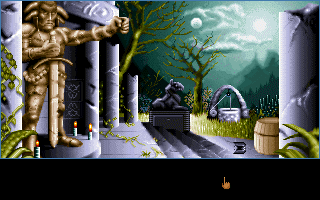
The logic driving these screens varies wildly between clever design and utter absurdity. You might spend ten minutes figuring out how to bribe a pair of gargoyles and cool molten metal with enchanted bellows just to forge a simple Golden Key. Later, you are tasked with sedating a giant evil rat using drugs, navigating a castle staircase while dodging rolling barrels to score a Silver Seed, or playing a bizarre glass-orb minigame using moon tears and basilisk breath. When the puzzles click, the pace feels fast and rewarding.
When they fail, you are left clicking every item on every hot spot until something happens. Contemporary reviews split hard on this title for that exact reason: back in Issue 109 of Computer Gaming World, critics praised it as an interesting puzzle adventure, while other writers dismissed it as little more than an illogical inventory dump. The game rarely explains its internal rules, leaving you to guess why a specific object should interact with a guardian or a dragon with a hundred faces.

Visually, the game takes risks that set it apart from typical medieval fantasy. Outside, the artwork relies heavily on a muted, faux-sepia palette that gives the Kingdom of Blue Rocks a dry, ancient look. Inside, the screens burst into vivid 256-color VGA art, mixed with short digitized actor sequences and FMV clips that were impressive for an MS-DOS game from 1992. The art team, led by Joseph Kluytmans, created a world that feels slightly off-kilter, bordered on subconscious dread.
Sound design was another area where Coktel Vision pushed the hardware. Composer Charles Callet wrote audio that scaled nicely if you were lucky enough to own a Sound Blaster card instead of relying on the tinny PC speaker. That audio punch helped distract from the sheer frustration of hitting a logic wall mid-quest. If you enjoyed the structural design of Coktel's earlier 1989 title Legend of Djel or their famous Gobliiins series, the rhythm here will feel instantly familiar, even if the tone is far more serious.
What plainly does not hold up is the uncompromising trial-and-error design. If you come into this expecting the rich narrative branches of a Sierra title from the same era, the rigid screen-by-screen progression will grate on your patience within the first hour. Yet for fans of hyper-focused inventory puzzles, the distinct art direction and tight mechanical constraints make it an intriguing piece of software to tackle with a fresh eyes.
You can play Ween: The Prophecy online right now, running directly in your web browser with no setup required. Without the hassle of tracking down old hardware or configuring DOS emulation yourself, you can jump straight into Ohkram's quest in a couple of clicks. Give it an evening, try to forge that initial key without resorting to a walkthrough, and see how long your logic holds up against Coktel Vision's stranger ideas.
Playing Ween: The Prophecy feels less like exploring a vast fantasy kingdom and more like tackling a series of densely packed, screen-by-screen puzzle boxes, where every item in your satchel exists to solve a single hyper-specific problem.
Most adventure games from 1992 wanted you to walk across entire continents, but Ween: The Prophecy locks you inside tight, isolated scenes. Armed with a wand, an eye, and a hand icon, you play a young hero sent by your grandfather Ohkram to collect three magic grains of sand before the Great Eclipse arrives in three days. To get those grains into the Revuss hourglass and stop the sorcerer Kraal, you work through static first-person environments where almost every pixel serves a puzzle.
The core design choice here is absolute self-containment. Rather than keeping dozens of useless items in a endless inventory, your satchel holds just four items at a time. The game forces you to deal entirely with the screen in front of you before move forward, turning each stage into a self-contained trial. Built on the proprietary Gob engine by Coktel Vision, it trades expansive wandering for pure mechanical focus, giving every scene the feel of a stage play crammed inside your monitor.

The logic driving these screens varies wildly between clever design and utter absurdity. You might spend ten minutes figuring out how to bribe a pair of gargoyles and cool molten metal with enchanted bellows just to forge a simple Golden Key. Later, you are tasked with sedating a giant evil rat using drugs, navigating a castle staircase while dodging rolling barrels to score a Silver Seed, or playing a bizarre glass-orb minigame using moon tears and basilisk breath. When the puzzles click, the pace feels fast and rewarding.
When they fail, you are left clicking every item on every hot spot until something happens. Contemporary reviews split hard on this title for that exact reason: back in Issue 109 of Computer Gaming World, critics praised it as an interesting puzzle adventure, while other writers dismissed it as little more than an illogical inventory dump. The game rarely explains its internal rules, leaving you to guess why a specific object should interact with a guardian or a dragon with a hundred faces.

Visually, the game takes risks that set it apart from typical medieval fantasy. Outside, the artwork relies heavily on a muted, faux-sepia palette that gives the Kingdom of Blue Rocks a dry, ancient look. Inside, the screens burst into vivid 256-color VGA art, mixed with short digitized actor sequences and FMV clips that were impressive for an MS-DOS game from 1992. The art team, led by Joseph Kluytmans, created a world that feels slightly off-kilter, bordered on subconscious dread.
Sound design was another area where Coktel Vision pushed the hardware. Composer Charles Callet wrote audio that scaled nicely if you were lucky enough to own a Sound Blaster card instead of relying on the tinny PC speaker. That audio punch helped distract from the sheer frustration of hitting a logic wall mid-quest. If you enjoyed the structural design of Coktel's earlier 1989 title Legend of Djel or their famous Gobliiins series, the rhythm here will feel instantly familiar, even if the tone is far more serious.
What plainly does not hold up is the uncompromising trial-and-error design. If you come into this expecting the rich narrative branches of a Sierra title from the same era, the rigid screen-by-screen progression will grate on your patience within the first hour. Yet for fans of hyper-focused inventory puzzles, the distinct art direction and tight mechanical constraints make it an intriguing piece of software to tackle with a fresh eyes.
You can play Ween: The Prophecy online right now, running directly in your web browser with no setup required. Without the hassle of tracking down old hardware or configuring DOS emulation yourself, you can jump straight into Ohkram's quest in a couple of clicks. Give it an evening, try to forge that initial key without resorting to a walkthrough, and see how long your logic holds up against Coktel Vision's stranger ideas.
How Ween: The Prophecy is played — the keys the game listens to, grouped by what they do.
Highlighted keys are mapped — hover or tap one to see what it does.
The on-screen keyboard and gamepad mapping the browser player uses on a phone, a tablet or a controller, as opposed to the real keys above. $PRO members make their own in the player and share them here; anyone can pick one to play with.
Cheat codes, console commands and memory pokes for Ween: The Prophecy — each one verified and attributed.
Sign in to submitaka The Prophecy · Ween · נער הנבואה
How Ween: The Prophecy is played — the keys the game listens to, grouped by what they do.
Highlighted keys are mapped — hover or tap one to see what it does.
The on-screen keyboard and gamepad mapping the browser player uses on a phone, a tablet or a controller, as opposed to the real keys above. $PRO members make their own in the player and share them here; anyone can pick one to play with.
Cheat codes, console commands and memory pokes for Ween: The Prophecy — each one verified and attributed.
Sign in to submit