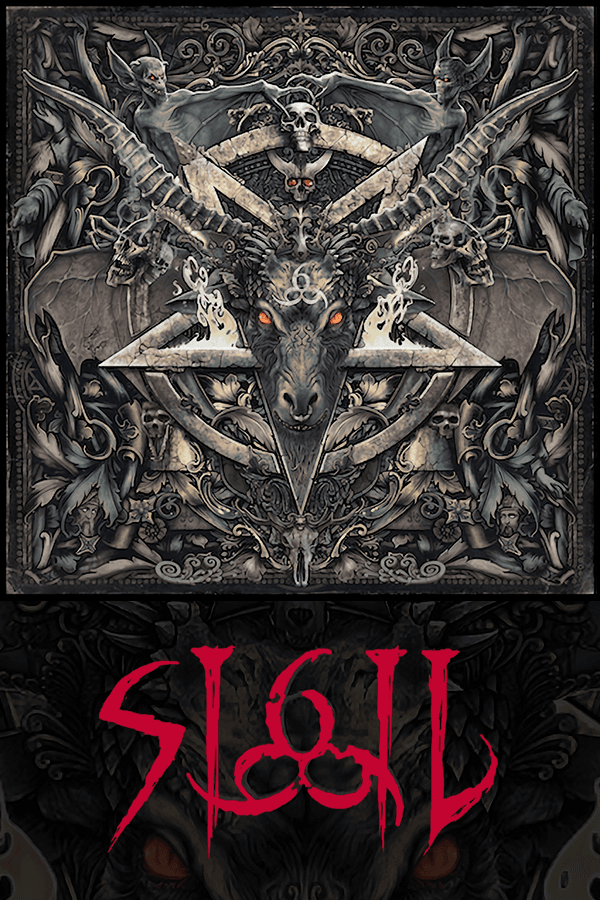

Twenty-five years after sealing the Hellmouth, John Romero returned to his original 1993 engine design with Sigil, an official fifth episode that trades wide-open monster arenas for suffocating lava trenches and tight ammo counts.
John Romero back at the drawing board
By 2019, modern source ports allowed level designers to build map layouts with tens of thousands of geometry lines, dynamic lighting, and complex scripting. Romero took the opposite path for Sigil, firing up Doom Builder 2 to design nine map WAD files that strictly adhered to the classic 1993 MS-DOS engine limits. That meant keeping within strict limits on visible surfaces and geometric detail so the game could run on an actual 486 PC with a Sound Blaster card.
The narrative picks up right after Thy Flesh Consumed. You kill the Spider Mastermind, step into the exit teleporter expecting to land back on Earth, but Baphomet glitches the pad with a demonic sigil. You fall straight into an even deeper, darker corner of Hell. Because it uses the original 1993 action engine format, the entire classic roster returns without the Doom II additions. You do not get the Super Shotgun or the Arch-vile here, just the classic pistol, shotgun, chaingun, rocket launcher, plasma rifle, and BFG9000 against waves of Imps, Cacodemons, and Barons of Hell.
Claustrophobia and evil eye switches
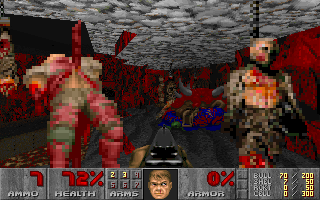
If you play Sigil like standard 1993 map sets, you will run out of ammo in the second corridor. Episode 5 starts on E5M1: Baphomet's Demesne and instantly corners you with limited floor space and tight corridors. The design philosophy shifts hard toward resource management and tactical retreats. Levels like E5M3: Cages of the Damned force you onto sliver-thin walkways suspended directly over bubbling lava, giving you almost no room to strafe away from incoming fireball salvos.
The signature mechanic of this episode is the shooting of glowing evil eye sigils embedded in the architecture. Instead of just flipping standard skull switches, you frequently need to scan wall textures, align a shot, and blast an eye to lower platforms, open doors, or unseal hidden passages. This feature turns navigation into a combat puzzle, forcing you to freeze in place and line up a shot while Shotgun Guys drop out of monster closets around you.
Romero designed these maps assuming players would use classic controls without modern source port features like jumping or vertical mouselook. If you try playing with vertical aiming, the eye puzzles lose their teeth. When locked to original MS-DOS horizontal aim, hunting for those high-mounted eye targets while dodging low-flying Pinkies creates genuine tension.
Where the map design burns the player
While the mapping style is sharp, Sigil has moments that cross the line from tough to downright spiteful. The level layouts are heavily packed with narrow paths, crushing traps, and floor cracks spilling endless lava. If you miss a drop onto a thin ledge or get bumped off by a Cacodemon, you often land in a deep damaging floor pit with no rad suit and no way out, leaving you to watch your health tick down to zero.
- E5M1: Baphomet's Demesne: Introduces tight ammo counts and forces immediate crowd control in cramped rooms.
- E5M3: Cages of the Damned: Features tight, high cage walkways where getting hit means falling into lava pits.
- E5M6: Unspeakable Persecution: Drops you into dark, labyrinthine halls filled with monster closet traps and hidden eye switches.
- E5M8: Halls of Perdition: The final arena confrontation, throwing Cyberdemons and heavy hitscanners into a small room.
The ending of E5M8 also leaves much to be desired. After struggling through brutal encounters like E5M7: Nightmare Underworld, the campaign ends on a strangely flat finish that feels abrupt after such an intense sequence of levels. Still, as a challenge map pack, it feels far more coherent and deliberately structured than the chaotic difficulty spikes of Thy Flesh Consumed.

Two distinct soundtracks for one descent into Hell
The release came with two audio options depending on how you loaded the WAD. The standard free release featured a classic MIDI soundtrack composed by James Paddock, which fits the original MS-DOS Sound Blaster synth profiles perfectly. For the physical releases published by Limited Run Games, guitar wizard Buckethead recorded an exclusive heavy metal soundtrack that played over the action.
The physical collector's box fast became a fan favorite, arriving with a custom floppy-disk-shaped 16GB USB drive and a pewter statue of John Romero's head on a spike, referencing the famous hidden easter egg from Doom II. Original cheat codes work exactly as expected; typing IDDQD for god mode or IDKFA for full weapons and keys will bail you out if a monster closet pins you into a corner.
How to play Sigil online right now
If you want a stiff test of your circle-strafing reflexes, this episode is a tough workout. It strips away modern shooter hand-holding and demands that you learn every turn of its claustrophobic layouts. What screenshots cannot capture is the oppressive spatial awareness the game forces on you: every foot of ground must be earned, and every shotgun shell counted.
You do not need to hunt down original 1990s WAD files or set up launch parameters to experience it. You can play Sigil free in your browser right here, with full audio and fluid performance running instantly. Jump into E5M1 tonight, keep your back away from the lava walls, and remember to check every dark corner for those glowing eye switches.