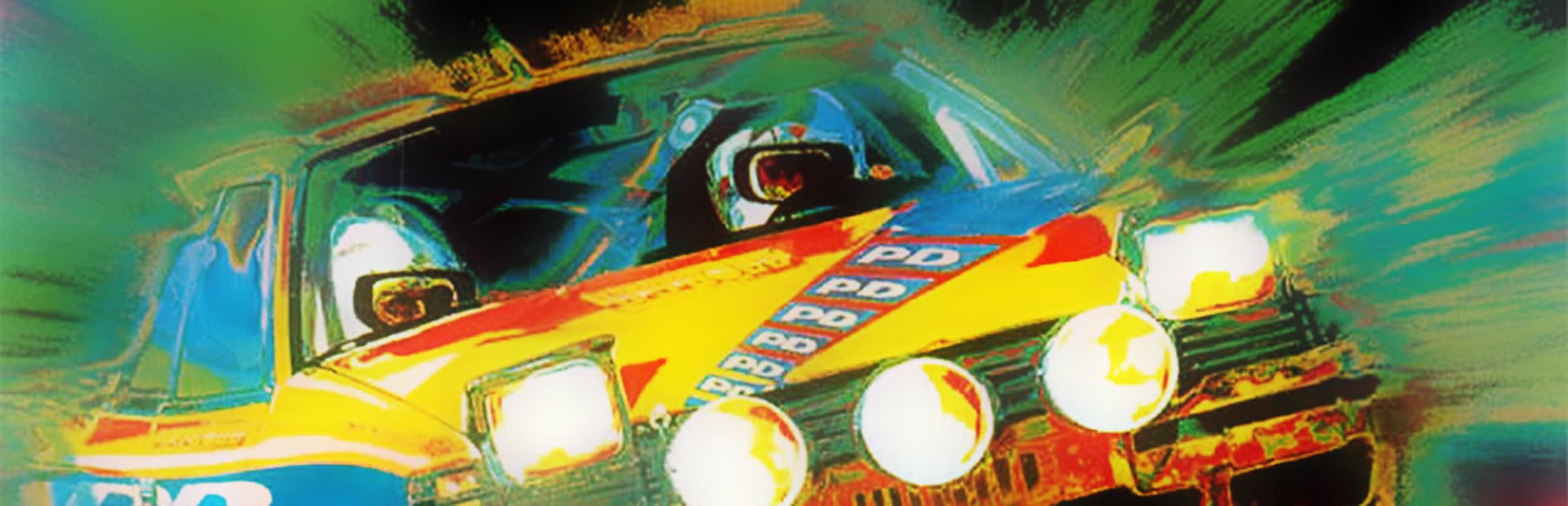
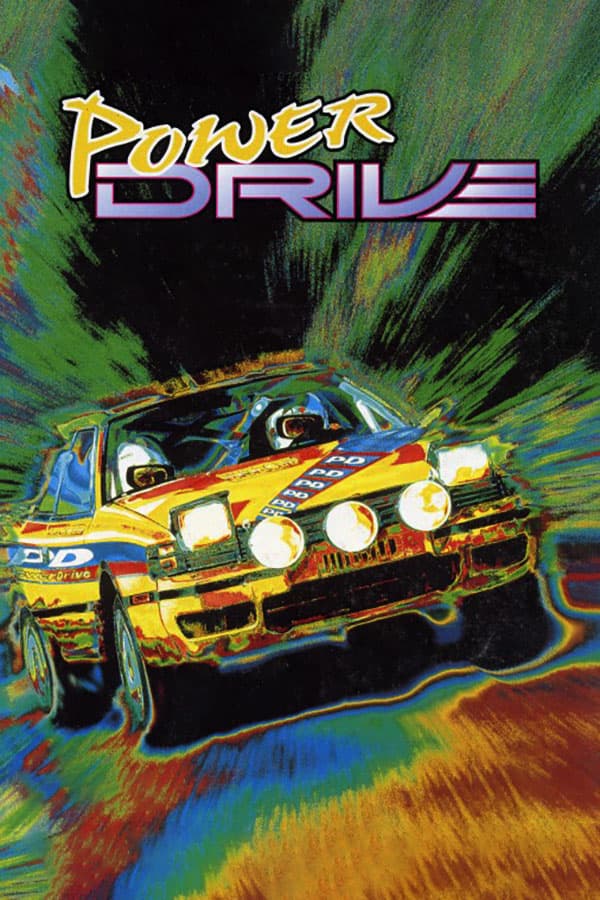

In Power Drive, missing a hairpin turn on the snowy tracks of Sweden costs you more than a few seconds: it leaves you with a smashed radiator and a repair bill that threatens your entire season.
Most top-down racers from the early nineties were about keeping your foot glued to the digital floorboard, but Rage Software took a different route. Released in late 1994, this isometric rally racer asked PC drivers to manage momentum, tire grip, and a strict financial budget. If you treat the turns in Sweden or the gravel paths in Kenya like an arcade sprint, you will bounce off the scenery, wreck your gearbox, and end up bankrupted before you ever unlock the faster cars.
The core structure pits you against a demanding season across eight countries, including Great Britain, France, and Monte-Carlo. Victory requires mastering three distinct formats: solitary time trials, head-to-head sprints against a CPU opponent, and tight skill tests that check how cleanly you can maneuver through cone gates. The handling is intentionally heavy and loose, forcing you to initiate slides early and feather your acceleration using the Ins key on standard keyboard controls.
Damage management is where the real tension sits. Every collision with a rock, tree, or opposing vehicle degrades specific components on your car, from the bodywork to the steering assembly. Between stages, your hard-earned prize money must be split between fixing broken parts and upgrading your vehicle's performance. Skimping on repairs to buy an engine upgrade sounds clever until your damaged headlights shatter during a pitch-black night stage, leaving you steering blind into an icy ditch.
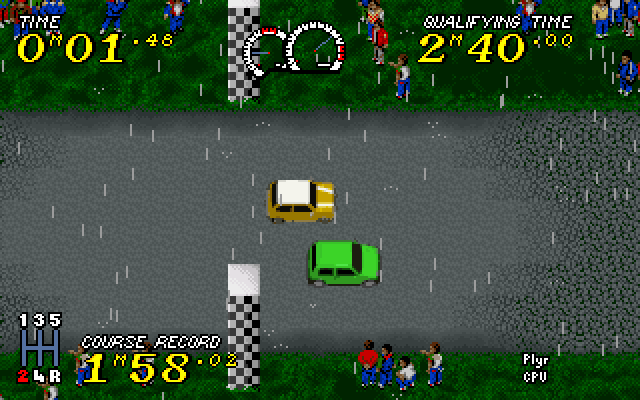
You start out behind the wheel of entry-level front-wheel-drive hatchbacks like the Mini Cooper S and Fiat Cinquecento. As your bank balance grows, you can purchase faster machines such as the Renault Clio, Vauxhall Astra, Ford Escort RS Cosworth, and the formidable Toyota Celica GT-Four. Each step up in horsepower drastically narrows your margin for error on narrow paths.
When this 1994 release landed on store shelves, PC gaming magazines were split on its merits. Period outlets like Joystick awarded it an 80%, highlighting the atmospheric weather effects and the strategic repair layer. However, publications like PC Zone slapped it with a 50/100, complaining that the heavy car physics felt sluggish compared to traditional top-down arcade games. On real hardware, just launching the MS-DOS game was its own battle, requiring precise conventional memory setups and XMS config tweaks to avoid system crashes.
The visual presentation designed by artists Andy Rixon, Paul Broadbent, and Simon Street features crisp 2D sprite work and varied surface terrain. Rainstorms turn tarmac into slick mirrors, while night stages narrow your visible area down to two bouncing headlight beams. The audio engineered by Kevin Bruce supplies crunching collision sound effects and engine whines that immediately signal when your transmission is failing.
The design remains uncompromising deep into the later stages. While early tracks allow for minor mistakes, the high-speed runs through Monte-Carlo demand pixel-perfect inputs. A single misjudged handbrake turn can tear off your bumper, ruin your steering alignment, and wipe out your cash reserves, forcing an early end to your championship campaign.
If you want to sample this era of European arcade development from Rage Software and publisher U.S. Gold, you can explore classic driving games in our archive to see how it compares against its contemporaries.
You can play Power Drive online right here without configuring MS-DOS memory setups or setting up Virtual DOS machines. The emulation boots up instantly inside your browser, mapping your standard keyboard controls to the original layout. Jump into the Monte-Carlo rally, take your first corner slow, and watch how quickly a single clipped barrier forces you to spend your early winnings in the repair shop.
In Power Drive, missing a hairpin turn on the snowy tracks of Sweden costs you more than a few seconds: it leaves you with a smashed radiator and a repair bill that threatens your entire season.
Most top-down racers from the early nineties were about keeping your foot glued to the digital floorboard, but Rage Software took a different route. Released in late 1994, this isometric rally racer asked PC drivers to manage momentum, tire grip, and a strict financial budget. If you treat the turns in Sweden or the gravel paths in Kenya like an arcade sprint, you will bounce off the scenery, wreck your gearbox, and end up bankrupted before you ever unlock the faster cars.
The core structure pits you against a demanding season across eight countries, including Great Britain, France, and Monte-Carlo. Victory requires mastering three distinct formats: solitary time trials, head-to-head sprints against a CPU opponent, and tight skill tests that check how cleanly you can maneuver through cone gates. The handling is intentionally heavy and loose, forcing you to initiate slides early and feather your acceleration using the Ins key on standard keyboard controls.
Damage management is where the real tension sits. Every collision with a rock, tree, or opposing vehicle degrades specific components on your car, from the bodywork to the steering assembly. Between stages, your hard-earned prize money must be split between fixing broken parts and upgrading your vehicle's performance. Skimping on repairs to buy an engine upgrade sounds clever until your damaged headlights shatter during a pitch-black night stage, leaving you steering blind into an icy ditch.

You start out behind the wheel of entry-level front-wheel-drive hatchbacks like the Mini Cooper S and Fiat Cinquecento. As your bank balance grows, you can purchase faster machines such as the Renault Clio, Vauxhall Astra, Ford Escort RS Cosworth, and the formidable Toyota Celica GT-Four. Each step up in horsepower drastically narrows your margin for error on narrow paths.
When this 1994 release landed on store shelves, PC gaming magazines were split on its merits. Period outlets like Joystick awarded it an 80%, highlighting the atmospheric weather effects and the strategic repair layer. However, publications like PC Zone slapped it with a 50/100, complaining that the heavy car physics felt sluggish compared to traditional top-down arcade games. On real hardware, just launching the MS-DOS game was its own battle, requiring precise conventional memory setups and XMS config tweaks to avoid system crashes.
The visual presentation designed by artists Andy Rixon, Paul Broadbent, and Simon Street features crisp 2D sprite work and varied surface terrain. Rainstorms turn tarmac into slick mirrors, while night stages narrow your visible area down to two bouncing headlight beams. The audio engineered by Kevin Bruce supplies crunching collision sound effects and engine whines that immediately signal when your transmission is failing.

The design remains uncompromising deep into the later stages. While early tracks allow for minor mistakes, the high-speed runs through Monte-Carlo demand pixel-perfect inputs. A single misjudged handbrake turn can tear off your bumper, ruin your steering alignment, and wipe out your cash reserves, forcing an early end to your championship campaign.
If you want to sample this era of European arcade development from Rage Software and publisher U.S. Gold, you can explore classic driving games in our archive to see how it compares against its contemporaries.
You can play Power Drive online right here without configuring MS-DOS memory setups or setting up Virtual DOS machines. The emulation boots up instantly inside your browser, mapping your standard keyboard controls to the original layout. Jump into the Monte-Carlo rally, take your first corner slow, and watch how quickly a single clipped barrier forces you to spend your early winnings in the repair shop.
How Power Drive is played — the keys the game listens to, grouped by what they do.
Highlighted keys are mapped — hover or tap one to see what it does.
Redefinable keyboard keys and joystick options are selectable in the game options. Run SOUND.EXE to modify music and sound setup.
The on-screen keyboard and gamepad mapping the browser player uses on a phone, a tablet or a controller, as opposed to the real keys above. $PRO members make their own in the player and share them here; anyone can pick one to play with.
Cheat codes, console commands and memory pokes for Power Drive — each one verified and attributed.
Sign in to submitHow Power Drive is played — the keys the game listens to, grouped by what they do.
Highlighted keys are mapped — hover or tap one to see what it does.
Redefinable keyboard keys and joystick options are selectable in the game options. Run SOUND.EXE to modify music and sound setup.
The on-screen keyboard and gamepad mapping the browser player uses on a phone, a tablet or a controller, as opposed to the real keys above. $PRO members make their own in the player and share them here; anyone can pick one to play with.
Cheat codes, console commands and memory pokes for Power Drive — each one verified and attributed.
Sign in to submit