
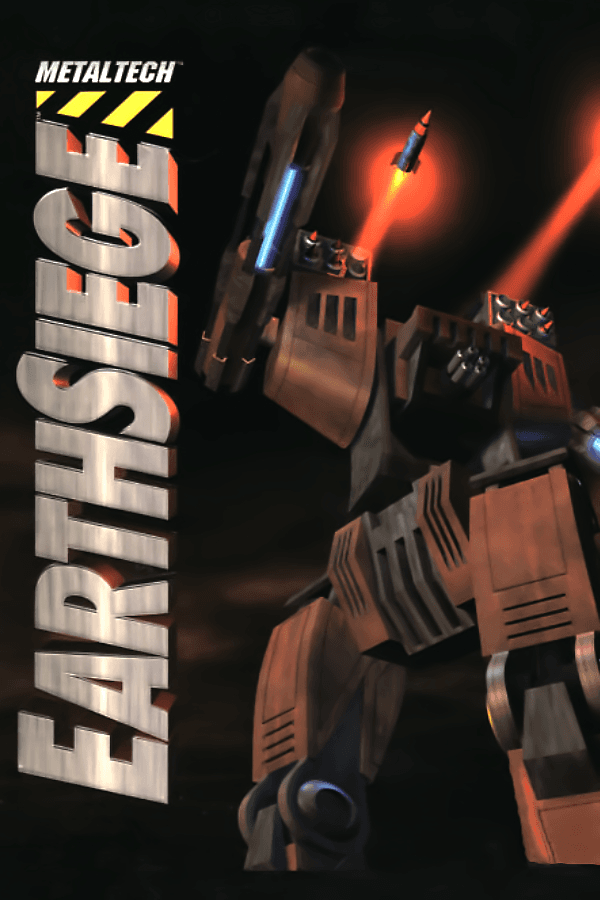

When Metaltech: Earthsiege hit PCs in 1994, it forced players to treat giant robot combat like actual military logistics rather than an arcade power fantasy. If you stomped into battle aiming for flashy torso explosions, you left the field broke, while taking out an enemy leg joint gave you the scrap metal needed to survive the next mission.
Tactical combat in this MechWarrior contender revolves entirely around salvage economics rather than raw firepower. Developed by Dynamix and released by Sierra On-Line, the game pits your human resistance against automated killer AIs known as Cybrids. You pilot massive bipedal war machines called HERCs across 45 missions, but what happens inside your cockpit only tells half the story.
The standard instinct in a 1990s 3D shooter was to dump full energy fire into an enemy chest plate until it burst. Do that here and you reduce high-grade weapons to useless ash. The smart move, and the one every veteran learned after failing early missions, was to concentrate laser fire directly on enemy knee hydraulics. Severing a limb incapacitates a Cybrid instantly and leaves its entire torso intact, giving your salvage crews heavy autocannons and raw chassis metal to drag back to base.
Managing those captured assets between sorties makes up the backbone of the campaign. You repair your damaged squad, configure weapon hardpoints, and allocate fresh gear to up to three AI wingmen who join you on missions. Your squadmates gain rank and improve their skill stats over time, provided you keep them alive through long operations spanning North America, South America, Antarctica, and Asia.
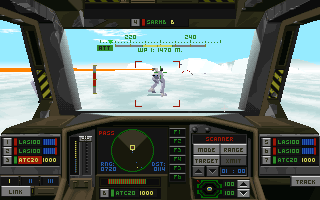
Dynamix did not build a lightweight action game; they constructed a dedicated 3D mech simulator that punished anyone trying to play on a basic keyboard setup. The cockpit interface demands independent control over torso rotation, foot movement, throttle settings, and weapon group cycling. Trying to track a fast-moving Cybrid while steering your legs in a different direction using pure keyboard commands usually ended with your HERC walking sideways into a mountain face.
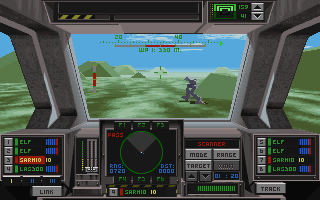
The game was built to flex high-end PC hardware of 1994, using a voxel-based 3D terrain engine that rendered open valleys and rolling hills far better than traditional flat polygon planes could handle at the time. Audio was equally ambitious, using digitised speech for squad updates. If you bought the original floppy disk release, Sierra sold a separate Speech Pack add-on to enable full radio chatter, though CD-ROM owners got those voice files and pre-rendered commander briefings included right on the disc.
That heavy focus on realistic simulation placed it directly in competition with FASA's BattleTech universe games. While it lacked the established boardgame license of its rivals, the tactical depth of its damage modeling proved that original sci-fi settings could stand on their own merits in the simulation market.
For all its technical polish, the campaign structure generated fierce arguments among gaming magazines upon release. Writing for Computer Gaming World in January 1995, reviewer Jeff James gave it 2.5 out of 5 stars, taking aim at punishing mission difficulty spikes, bizarre structural failure consequences, and small technical glitches. One month later, Next Generation awarded it 4 out of 5 stars, calling it the finest mech simulator available on store shelves.
Both reviewers were right about different parts of the package. The difficulty curve could feel absurdly step-sloped if you lost a couple of primary weapons early in a theater of war, leaving your squad hopelessly outgunned in subsequent drops. Worse still was a notorious interface issue with expansion content: toggling expansion mission sets required navigating deep into the system options menu, an action that quietly wiped your current career progress and split your saves into entirely separate files.
Project designers Mark Crowe and David Selle built a narrative foundation that went well beyond standard robot action. The game manual, written by Gregory Rucka and Kurt Weber, laid out extensive fictional history regarding the rebellion of humanity's synthetic workers. Programmed by Paul Bowman with art direction by Robert Caracol and a music score by Timothy Steven Clarke and Christopher Stevens, the project kicked off a major gaming franchise.
The mechanical core of this early release established a sequence of tactical habits that defined the series:
That world expanded rapidly into Metaltech: Battledrome, Earthsiege 2, MissionForce: CyberStorm, Starsiege, and ultimately the classic multiplayer shooter series Tribes. Rights-holder Hi-Rez Studios recognized the historical line connecting these games and officially released Metaltech: Earthsiege alongside its sequels as freeware in October 2015.
If you have never sat behind the multi-screen dashboard of a HERC, the learning curve is steep, but the reward is a classic MS-DOS game that treats your decisions with complete honesty. You cannot simply blow your way through enemy lines on low ammo, and losing a seasoned squadmate feels like a genuine blow to your campaign logistics. The controls take twenty minutes to tame, but once you learn to circle-strafe a Cybrid while stripping its weapon mounts, the mechanical depth clicks into place.
You can play this classic Metaltech: Earthsiege MS-DOS game directly in your browser right now, with zero installation chores or complex setups required. Fire it up, jump straight into the pilot seat, and remember to aim low on your very first target.
When Metaltech: Earthsiege hit PCs in 1994, it forced players to treat giant robot combat like actual military logistics rather than an arcade power fantasy. If you stomped into battle aiming for flashy torso explosions, you left the field broke, while taking out an enemy leg joint gave you the scrap metal needed to survive the next mission.
Tactical combat in this MechWarrior contender revolves entirely around salvage economics rather than raw firepower. Developed by Dynamix and released by Sierra On-Line, the game pits your human resistance against automated killer AIs known as Cybrids. You pilot massive bipedal war machines called HERCs across 45 missions, but what happens inside your cockpit only tells half the story.
The standard instinct in a 1990s 3D shooter was to dump full energy fire into an enemy chest plate until it burst. Do that here and you reduce high-grade weapons to useless ash. The smart move, and the one every veteran learned after failing early missions, was to concentrate laser fire directly on enemy knee hydraulics. Severing a limb incapacitates a Cybrid instantly and leaves its entire torso intact, giving your salvage crews heavy autocannons and raw chassis metal to drag back to base.
Managing those captured assets between sorties makes up the backbone of the campaign. You repair your damaged squad, configure weapon hardpoints, and allocate fresh gear to up to three AI wingmen who join you on missions. Your squadmates gain rank and improve their skill stats over time, provided you keep them alive through long operations spanning North America, South America, Antarctica, and Asia.
Dynamix did not build a lightweight action game; they constructed a dedicated 3D mech simulator that punished anyone trying to play on a basic keyboard setup. The cockpit interface demands independent control over torso rotation, foot movement, throttle settings, and weapon group cycling. Trying to track a fast-moving Cybrid while steering your legs in a different direction using pure keyboard commands usually ended with your HERC walking sideways into a mountain face.
The game was built to flex high-end PC hardware of 1994, using a voxel-based 3D terrain engine that rendered open valleys and rolling hills far better than traditional flat polygon planes could handle at the time. Audio was equally ambitious, using digitised speech for squad updates. If you bought the original floppy disk release, Sierra sold a separate Speech Pack add-on to enable full radio chatter, though CD-ROM owners got those voice files and pre-rendered commander briefings included right on the disc.
That heavy focus on realistic simulation placed it directly in competition with FASA's BattleTech universe games. While it lacked the established boardgame license of its rivals, the tactical depth of its damage modeling proved that original sci-fi settings could stand on their own merits in the simulation market.
For all its technical polish, the campaign structure generated fierce arguments among gaming magazines upon release. Writing for Computer Gaming World in January 1995, reviewer Jeff James gave it 2.5 out of 5 stars, taking aim at punishing mission difficulty spikes, bizarre structural failure consequences, and small technical glitches. One month later, Next Generation awarded it 4 out of 5 stars, calling it the finest mech simulator available on store shelves.
Both reviewers were right about different parts of the package. The difficulty curve could feel absurdly step-sloped if you lost a couple of primary weapons early in a theater of war, leaving your squad hopelessly outgunned in subsequent drops. Worse still was a notorious interface issue with expansion content: toggling expansion mission sets required navigating deep into the system options menu, an action that quietly wiped your current career progress and split your saves into entirely separate files.
Project designers Mark Crowe and David Selle built a narrative foundation that went well beyond standard robot action. The game manual, written by Gregory Rucka and Kurt Weber, laid out extensive fictional history regarding the rebellion of humanity's synthetic workers. Programmed by Paul Bowman with art direction by Robert Caracol and a music score by Timothy Steven Clarke and Christopher Stevens, the project kicked off a major gaming franchise.
The mechanical core of this early release established a sequence of tactical habits that defined the series:
That world expanded rapidly into Metaltech: Battledrome, Earthsiege 2, MissionForce: CyberStorm, Starsiege, and ultimately the classic multiplayer shooter series Tribes. Rights-holder Hi-Rez Studios recognized the historical line connecting these games and officially released Metaltech: Earthsiege alongside its sequels as freeware in October 2015.
If you have never sat behind the multi-screen dashboard of a HERC, the learning curve is steep, but the reward is a classic MS-DOS game that treats your decisions with complete honesty. You cannot simply blow your way through enemy lines on low ammo, and losing a seasoned squadmate feels like a genuine blow to your campaign logistics. The controls take twenty minutes to tame, but once you learn to circle-strafe a Cybrid while stripping its weapon mounts, the mechanical depth clicks into place.
You can play this classic Metaltech: Earthsiege MS-DOS game directly in your browser right now, with zero installation chores or complex setups required. Fire it up, jump straight into the pilot seat, and remember to aim low on your very first target.
How Metaltech: Earthsiege is played — the keys the game listens to, grouped by what they do.
Highlighted keys are mapped — hover or tap one to see what it does.
If using a joystick for HERC movement, it must be calibrated in the options menu or via F12 during simulation. Control inversion options for turret tilt and backturn can be configured in KEYJOY.CFG.
The on-screen keyboard and gamepad mapping the browser player uses on a phone, a tablet or a controller, as opposed to the real keys above. $PRO members make their own in the player and share them here; anyone can pick one to play with.
Cheat codes, console commands and memory pokes for Metaltech: Earthsiege — each one verified and attributed.
Sign in to submitHow Metaltech: Earthsiege is played — the keys the game listens to, grouped by what they do.
Highlighted keys are mapped — hover or tap one to see what it does.
If using a joystick for HERC movement, it must be calibrated in the options menu or via F12 during simulation. Control inversion options for turret tilt and backturn can be configured in KEYJOY.CFG.
The on-screen keyboard and gamepad mapping the browser player uses on a phone, a tablet or a controller, as opposed to the real keys above. $PRO members make their own in the player and share them here; anyone can pick one to play with.
Cheat codes, console commands and memory pokes for Metaltech: Earthsiege — each one verified and attributed.
Sign in to submit