
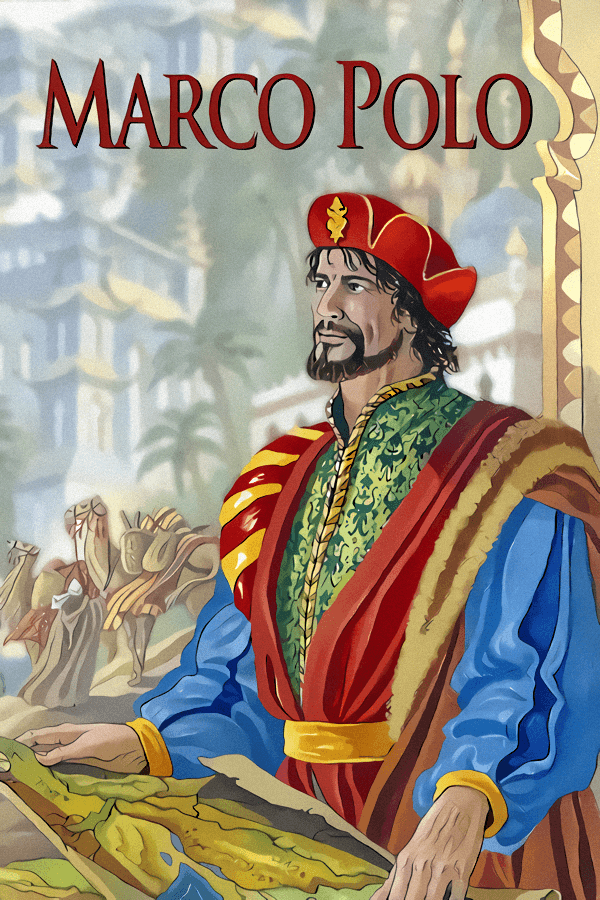

In Marco Polo, your survival along the Silk Road relies as much on listening carefully to market rumours as it does on flipping raw silk and spices for profit. If your sound setup fails to produce speech, you will spend your journey completely blind to the critical advice local merchants give you in every tavern.
Trading Spices in Marco Polo Requires Listening to the Locals
Everything in this 1995 strategy / tactics title hinges on a single, uncompromising design choice: critical clues are spoken out loud rather than printed on screen. Developed by Infogrames Europe SA and brought to PC by I•Motion, Inc., the game demands working audio. If your Sound Blaster isn't configured correctly or your speakers are muted, you will miss tavern gossip entirely, leaving you to guess which native markets want your spices and which ones are about to be blockaded.
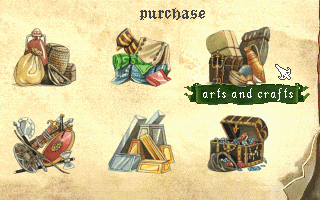
When you step into a town, the perspective shifts to a first-person view of local inns, bazaars, and courtrooms. You talk to shady bazaar characters, local merchants, and visiting princes to figure out where prices are swinging. Selecting the right dialogue option grants actionable intelligence, but because key parameters are delivered verbally, you have to pay attention to every sentence. Back in 1995, players who skimmed text-heavy manuals found out the hard way that missing a spoken sentence meant losing an entire caravan's worth of investment in a bad trade.
FMV Clips and Khan’s Tasks Hold the Silk Road Together
The campaign follows the young Venetian merchant across medieval Asia, balancing pure market arbitrage with official errands. Your long-term wealth depends on buying low in one settlement and transporting goods across hostile territory to sell high in another. Yet cash alone does not win the game; gaining fame requires accepting contracts from regional warlords and high-ranking patrons. Chief among these patrons is Kublai Khan, who hands out the largest share of narrative missions along your route.
To flesh out the historical setting, Infogrames integrated photographic stills and full-motion video clips sourced directly from an Italian television series about the explorer. Completing a task for the Khan triggers video sequences that transition your caravan into new regions, breaking up the interface work of market screens. An integrated historical database sits right inside the main menu, acting as an early software wiki that provides detailed entries on ancient Chinese culture, geography, and medieval trade routes.
Bandits, Storms, and Scarcity Turn Small Margins Into Disaster
Managing a caravan between cities requires constant attention to logistics. Goods take up weight, supplies drain every day you spend on the road, and taking safer detours eats directly into your profit margin. The Silk Road throws plenty of trouble your way:
- Dust storms that disorient your caravan and consume extra rations.
- Mountain avalanches that destroy valuable freight before you reach market.
- Bandit attacks that force you to sacrifice cargo or hire expensive guards.
A successful trip depends entirely on risk management. Buying cheap porcelain in one town means nothing if an avalanche crushing your pack animals leaves you unable to haul it to the capital. The economy strictly punishes greed: over-leveraging your coin on expensive luxury items right before entering territory controlled by aggressive warlords is a guaranteed way to lose a run.
Where Marco Polo Fails to Hold a Trader’s Interest
Despite its rich atmosphere and digitized video production, the gameplay loop suffers from a severe shortage of meaningful mechanics. In practice, trade routes quickly boil down to a simple cycle of gathering spoken clues, loading up on the recommended commodity, and clicking along a static map. When reviewers at Computer Gaming World evaluated the release, reviewer Arinn Dembo remarked that she found "the legend more interesting than the journey," pointing directly to how thin the business simulation actually feels once the initial novelty wears off.
The constant, unavoidable conflict between surrounding warlords adds another layer of frustration. Regional wars frequently close off key trading hubs without giving you enough warning to adjust your inventory, forcing long detours that drain supplies. While the Marco Polo MS-DOS game succeeds at making medieval Asia feel vast, it often leaves you with too few choices when crisis strikes, making success feel more like luck than tactical calculation.
Play Marco Polo Online in Your Web Browser
If you want to experience this multimedia hybrid for yourself, you can play Marco Polo online for free right here in your web browser. There is no software to set up, so you can jump straight into the markets of the Silk Road without hunting down original floppies or hardware CD drives.
Before you launch your first caravan, make sure your browser audio is unmuted. Listening closely to every spoken word in the initial towns will mean the difference between making a fortune for the Khan and starving in the desert.