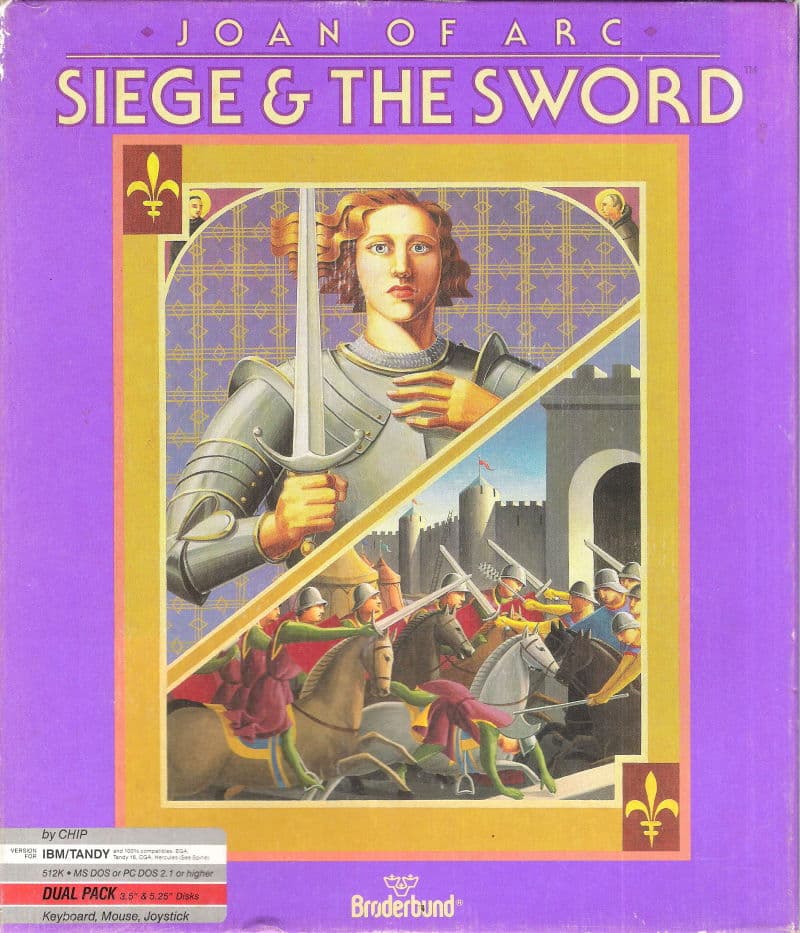
Joan of Arc: Siege & the Sword
aka Jeanne d'Arc · Juana de Arco
In Joan of Arc: Siege & the Sword, you take the role of Charles VII in 1428 to liberate France from English forces and rebellious dukes. Winning requires balancing army payrolls, treacherous diplomacy, and precise timing in side-view duels.
Joan of Arc: Siege & the Sword mixes macro strategy with frantic swordplay
When you fire up this 1989 release from developer Chip, you meet an ambitious structure. The map screen hands you top-down control over fifteenth-century France. Your goal is straightforward: retake key strongholds like Orleans and Rheims so Charles can secure his coronation.
Cinemaware established this hybrid format with Defender of the Crown, but this campaign takes its tactical map far more seriously. You spend considerable time looking over territory, counting revenues, and ordering garrisons before sending troops into conflict. The top-down view gives a clear overview of unit placements across the kingdom, helping you plan every movement before committing troops to battle.
The manual famously spends pages recounting French history while leaving actual gameplay controls unexplained. You learn the key bindings by trial and error. Once you grasp the command layout, the underlying design loop reveals itself.
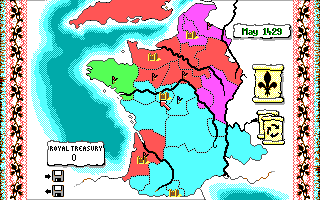
Managing your treasury means making brutal choices
Maintaining an army of cavalry, foot soldiers, and archers demands steady gold. Taxing your provinces keeps your war chest full, but pushing tax rates too high triggers violent rebellions. Balancing your revenues against provincial happiness becomes the real campaign struggle.
When legal taxes fall short, the game offers dark diplomatic choices. You can sell captured nobles back to their factions or simply execute prisoners to eliminate future field threats. If a siege looks too costly in lives, strategic bribery or a vial of poison can quiet a hostile commander before your troops reach the walls.
This ruthless campaign economic system forces distinct decision loops:
- Set provincial tax rates to fund troops without provoking local uprisings.
- Ransom captured enemy leaders for gold or execute them to permanently break enemy command structure.
- Deploy covert options like poison and bribes when direct assault threatens to deplete your forces.
- Distribute archers, foot soldiers, and cavalry across key border cities to hold retaken ground.
Managing these systems keeps this tactical strategy game busy between combat encounters. Squeezing your populace too hard for gold quickly backfires, forcing you to march loyal soldiers back home to quell domestic revolts.
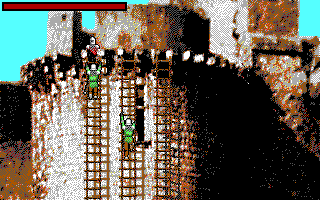
Action sequences test your patience as much as your reflexes
When diplomatic options fail, combat splits into distinct action minigames. Storming city walls requires directing unit formations while taking heavy fire. The screen switches to digitized photographic backdrops for these set pieces, providing a distinct visual style for the period.
Breaching a castle interior shifts the game into a side-view sword fight. These duels require precise spacing and attack choices to defeat garrison defenders. The animation runs at a deliberate pace, meaning button-mashing usually leaves Charles open to a quick counter-strike.
Mounted jousting events present the steepest hurdle in the game. The knight duel in Brittany is infamous among players for its tight timing window. A slight miscalculation with your lance sends you tumbling into the dirt, wiping out hard-earned strategic gains in seconds.
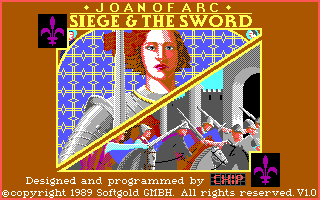
Joan of Arc: Siege & the Sword falters when the action stalls
For all its clever strategic ideas, design quirks hold the experience back. Computer-controlled armies often exhibit passive behavior, letting you isolate territories without coordinating multi-front counterattacks. Weak AI routines turn late-game clean-up into a repetitive chore rather than a tense tactical puzzle.
Pacing also suffers during siege scenes. Watching soldiers breach fortifications takes far too long, turning dramatic battles into tests of endurance. If you conquer every territory, the campaign ends with a single static screen of text, offering no grand victory animation after hours of careful management.
At the time of release, period gaming magazines reflected these sharp splits in opinion. Zzap!64 awarded the title a 93% rating, while Computer Gaming World reviewer Chris Lombardi praised the authentic historical atmosphere but pointed out that flaws in execution kept it from reaching its full potential.
Give this DOS classic a spin in your browser
The strategic map management and dark diplomatic choices still work, even if the action timing and slow sieges demand patience. If you enjoy historical wargames with direct swordplay, this title offers an intriguing slice of late-eighties design. You can explore published by Brøderbund history titles and play Joan of Arc: Siege & the Sword online right here in your browser, complete with all original features and zero installation hassles.