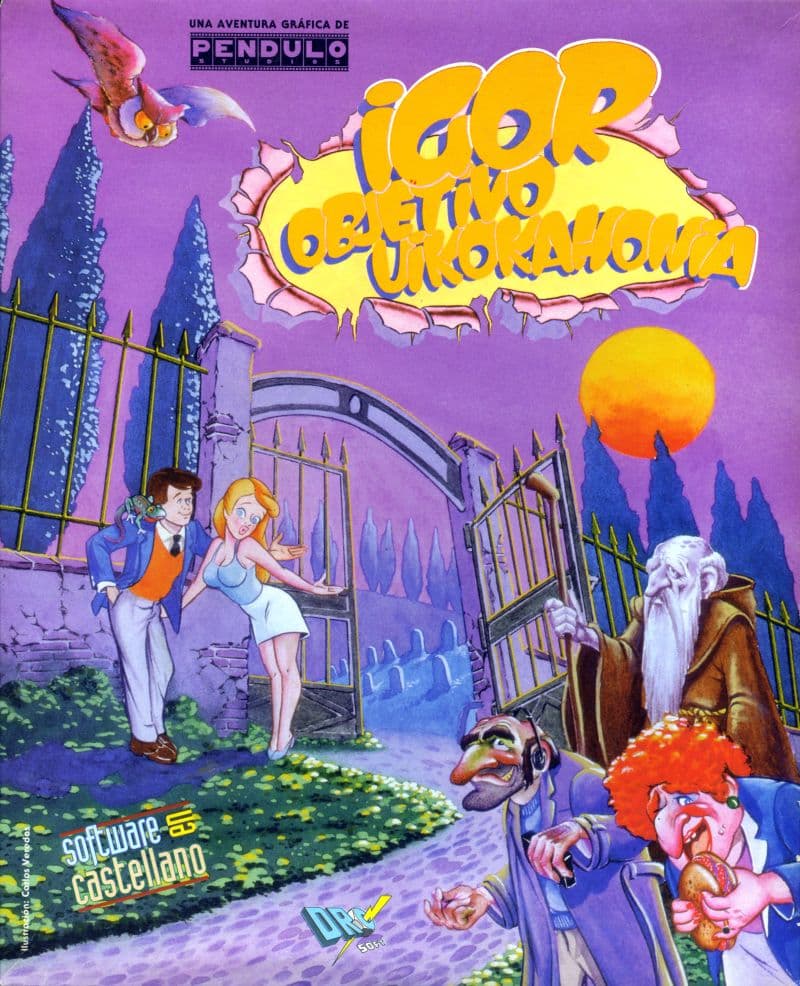
aka Igor: Objetivo Uikokahonia
To impress his classmate Laura Wright and earn a spot on her university biology trip, Igor Parker has to pass an exam, turn in an essay, and find cash for a ticket in Igor: Objective Uikokahonia.
Most adventure games of the mid-1990s start with an evil wizard or an alien invasion, but Igor: Objective Uikokahonia opens with the dull reality of college paperwork. You control Igor Parker, a university student scheming to join his classmate Laura on an island trip to Uikokahonia while competing against his rival, Phillip Goolash. Before you can even think about the beach, you are stuck walking around campus trying to satisfy basic administrative requirements.
The goals seem simple on paper: submit an end-of-semester paper, clear a biology exam, and buy a ticket. Doing all three requires talking to non-player characters and scouring campus rooms to collect items. Eventually, the low-stakes campus rivalry turns into a full criminal and espionage investigation, taking Igor from university lecture halls into underground catacombs and finally out to the island itself.
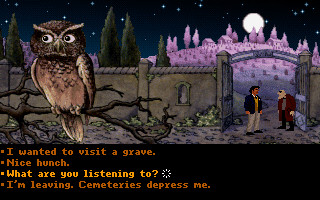
You interact with the world through a point-and-select verb interface at the bottom of the screen, right alongside your inventory items. Selecting the right verb and combining items gets you through the early hurdles, but the game quickly presents its biggest challenge: finding the key item hidden in a crowded room.
Before four friends built this project in 1993, Spain did not have a home-grown 3D or 2D classic point-and-click adventure of this style. Ramón Hernáez, Rafael Latiegui, Felipe Gómez Pinilla, and Miguel Ángel Ramos founded Pendulo Studios to make it happen, working part-time on a budget under 400,000 pesetas. They brought in freelancers to compose the music and paint the graphical backgrounds, pulling the title together in roughly nine months.
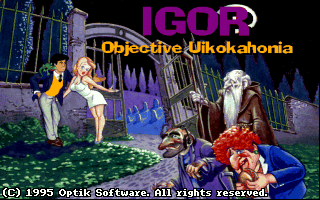
when published by DROsoft on floppy disks in 1994, the game sold well enough locally to turn Pendulo Studios into a full-time developer. North American publisher Optik Software brought it over in 1995, and a CD-ROM re-release followed later from Dinamic Multimedia in 1998. The expanded English CD-ROM release replaced silent scenes with full voice acting, improved sound effects, updated tracks, and revised visual details, though low overseas sales meant that localized voice edition became a rare find for physical collectors today.
The inventory puzzles in Igor: Objective Uikokahonia rely mostly on practical, cause-and-effect solutions rather than wild cartoon logic. Trying every item on every object will rarely break your save, and the initial chain of tasks around campus keeps your goal clear. If you need money for a ticket, you look for logical ways to earn or trade for it across campus.
The frustration comes entirely from the art style and navigation. The graphics on the MS-DOS version can make small objects bleed directly into the background scenery. You will frequently find yourself sweeping your cursor over every square inch of the screen just to locate a key item tucked behind a desk or hidden along a wall, a classic pixel-hunting wall that hits hard in the underground catacombs. Players who get past the visual clutter still have to contend with dialogue that feels functional rather than funny, missing the sharp wit of its contemporaries.
Without a guide, navigation in the catacombs turns into pure trial and error. The absence of a strong soundtrack in the early floppy release leaves these maze-like segments pretty quiet, making long stretches of backtracking feel even slower than they are.
If you put it side by side with the heavyweights of 1994, the dialogue falls flat and the pixel hunting will make you pull your hair out. Yet, the logical item chains and the sudden drop into a full-blown spy plot give it a personality of its own. It shows an early look at a developer that would spend the next two decades refining how they build graphical adventures.
The best way to experience it is to fire up the initial campus area and see how far your inventory tricks take you before the exam. You can play Igor: Objective Uikokahonia free in your browser right now, with no setup required. Jump in, grab the campus items, and see if you can trick your way past your rival to get on that plane to Uikokahonia.
To impress his classmate Laura Wright and earn a spot on her university biology trip, Igor Parker has to pass an exam, turn in an essay, and find cash for a ticket in Igor: Objective Uikokahonia.
Most adventure games of the mid-1990s start with an evil wizard or an alien invasion, but Igor: Objective Uikokahonia opens with the dull reality of college paperwork. You control Igor Parker, a university student scheming to join his classmate Laura on an island trip to Uikokahonia while competing against his rival, Phillip Goolash. Before you can even think about the beach, you are stuck walking around campus trying to satisfy basic administrative requirements.
The goals seem simple on paper: submit an end-of-semester paper, clear a biology exam, and buy a ticket. Doing all three requires talking to non-player characters and scouring campus rooms to collect items. Eventually, the low-stakes campus rivalry turns into a full criminal and espionage investigation, taking Igor from university lecture halls into underground catacombs and finally out to the island itself.
You interact with the world through a point-and-select verb interface at the bottom of the screen, right alongside your inventory items. Selecting the right verb and combining items gets you through the early hurdles, but the game quickly presents its biggest challenge: finding the key item hidden in a crowded room.
Before four friends built this project in 1993, Spain did not have a home-grown 3D or 2D classic point-and-click adventure of this style. Ramón Hernáez, Rafael Latiegui, Felipe Gómez Pinilla, and Miguel Ángel Ramos founded Pendulo Studios to make it happen, working part-time on a budget under 400,000 pesetas. They brought in freelancers to compose the music and paint the graphical backgrounds, pulling the title together in roughly nine months.

when published by DROsoft on floppy disks in 1994, the game sold well enough locally to turn Pendulo Studios into a full-time developer. North American publisher Optik Software brought it over in 1995, and a CD-ROM re-release followed later from Dinamic Multimedia in 1998. The expanded English CD-ROM release replaced silent scenes with full voice acting, improved sound effects, updated tracks, and revised visual details, though low overseas sales meant that localized voice edition became a rare find for physical collectors today.
The inventory puzzles in Igor: Objective Uikokahonia rely mostly on practical, cause-and-effect solutions rather than wild cartoon logic. Trying every item on every object will rarely break your save, and the initial chain of tasks around campus keeps your goal clear. If you need money for a ticket, you look for logical ways to earn or trade for it across campus.
The frustration comes entirely from the art style and navigation. The graphics on the MS-DOS version can make small objects bleed directly into the background scenery. You will frequently find yourself sweeping your cursor over every square inch of the screen just to locate a key item tucked behind a desk or hidden along a wall, a classic pixel-hunting wall that hits hard in the underground catacombs. Players who get past the visual clutter still have to contend with dialogue that feels functional rather than funny, missing the sharp wit of its contemporaries.

Without a guide, navigation in the catacombs turns into pure trial and error. The absence of a strong soundtrack in the early floppy release leaves these maze-like segments pretty quiet, making long stretches of backtracking feel even slower than they are.
If you put it side by side with the heavyweights of 1994, the dialogue falls flat and the pixel hunting will make you pull your hair out. Yet, the logical item chains and the sudden drop into a full-blown spy plot give it a personality of its own. It shows an early look at a developer that would spend the next two decades refining how they build graphical adventures.
The best way to experience it is to fire up the initial campus area and see how far your inventory tricks take you before the exam. You can play Igor: Objective Uikokahonia free in your browser right now, with no setup required. Jump in, grab the campus items, and see if you can trick your way past your rival to get on that plane to Uikokahonia.
How Igor: Objective Uikokahonia is played — the keys the game listens to, grouped by what they do.
Highlighted keys are mapped — hover or tap one to see what it does.
A mouse driver must be loaded before launching the game from DOS. System hotkeys (save, load, pause) are not detailed in the available manual text.
The on-screen keyboard and gamepad mapping the browser player uses on a phone, a tablet or a controller, as opposed to the real keys above. $PRO members make their own in the player and share them here; anyone can pick one to play with.
Cheat codes, console commands and memory pokes for Igor: Objective Uikokahonia — each one verified and attributed.
Sign in to submitHow Igor: Objective Uikokahonia is played — the keys the game listens to, grouped by what they do.
Highlighted keys are mapped — hover or tap one to see what it does.
A mouse driver must be loaded before launching the game from DOS. System hotkeys (save, load, pause) are not detailed in the available manual text.
The on-screen keyboard and gamepad mapping the browser player uses on a phone, a tablet or a controller, as opposed to the real keys above. $PRO members make their own in the player and share them here; anyone can pick one to play with.
Cheat codes, console commands and memory pokes for Igor: Objective Uikokahonia — each one verified and attributed.
Sign in to submit