
Empire II: The Art of War
Rate this game
- Played
- Rarely
If you boot up Empire II: The Art of War expecting to expand cities, scout fog of war, and churn out armies, you are in for an immediate shock.
Empire II: The Art of War abandons expansion for pure tactics
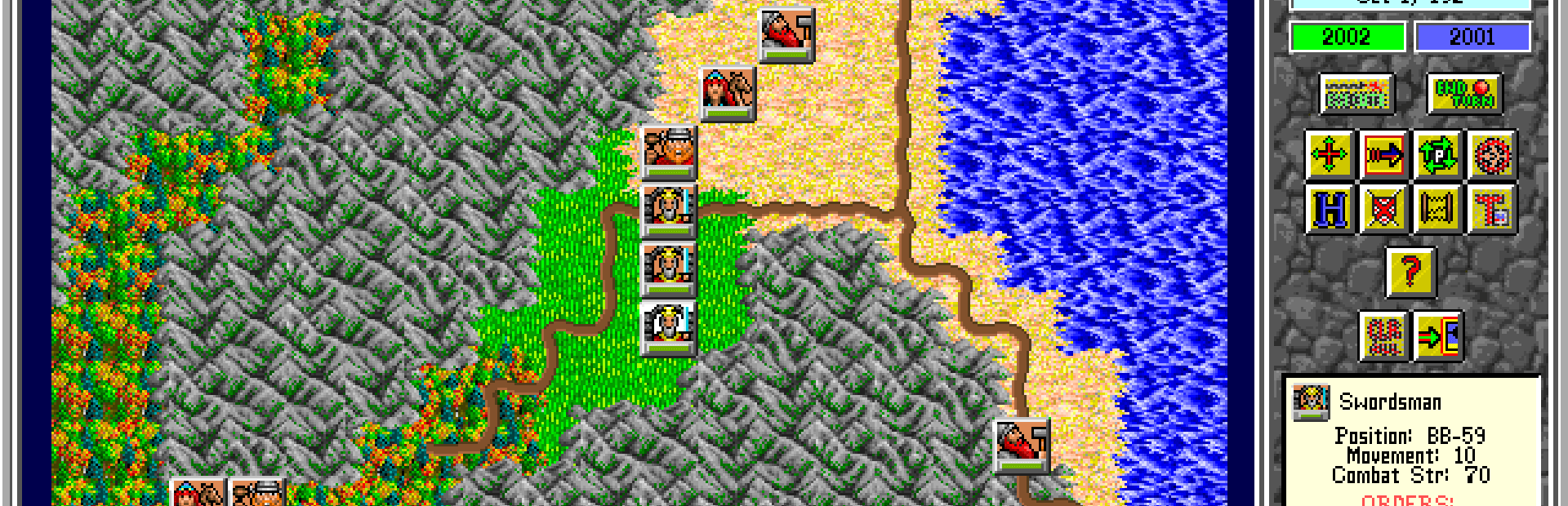
Designers Mark Lewis Baldwin and Bob Rakosky took the series in a sharp turn away from standard 4X empire building. There is no resource management, no map exploration, and no unit production in this 1995 1995 title. Instead, you drop directly into pre-set battle scenarios on a top-down hex grid, commanding existing armies toward specific point totals or strategic choke points.
The system shifts focus entirely to unit interaction and terrain. Crossing marshland or climbing hills degrades movement and combat math across 15 distinct terrain types. Unlike the original binary win-or-lose skirmishes, land units take partial damage, while artillery fires across distances and weather conditions shift visibility. To handle the scale, producer Deane Rettig and developer White Wolf Productions included a modem play mode featuring simultaneous order execution so players did not have to wait out massive turn sequences.
When line units refuse to march
The mechanics sound robust on paper, but in practice, combat frequently collapses under the weight of an aggressive morale system. When a unit's morale breaks, it retreats instantly and ignores your commands. Watching a key defensive line crumble because damaged infantry refuses to hold a pass is realistic, but when the UI gives little feedback on morale thresholds, it feels like the software is disobeying you for no reason.
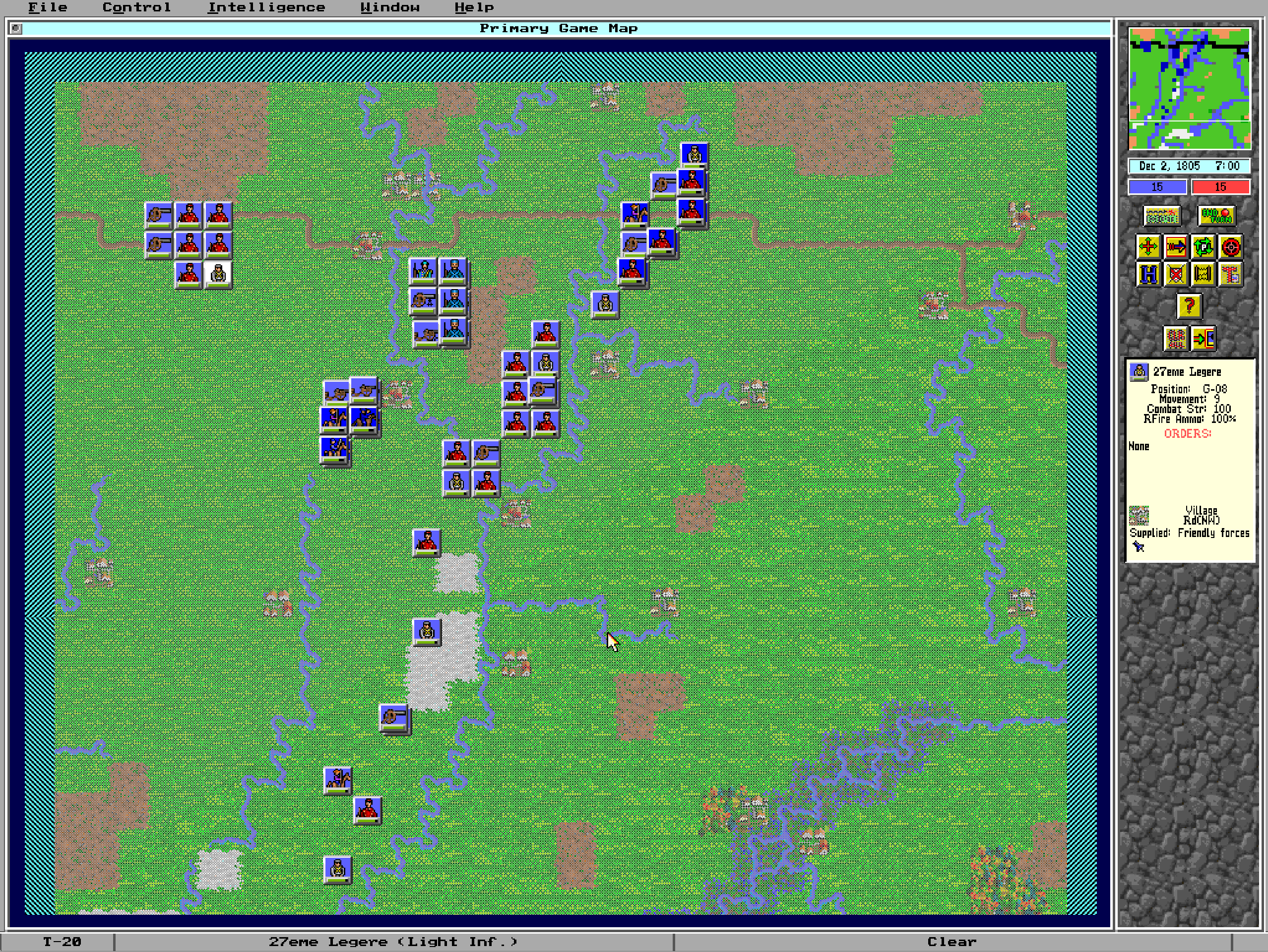
The user interface makes managing these setbacks harder than it should be. The game sports non-intuitive menus and a lack of active, contextual in-game help. Issue a bad order, and the program greets you with an abrasive illegal-command sound effect rather than explaining why the move failed. There is a dedicated tutorial scenario meant to be played alongside the print manual, but if you jump into a random battle blindly, the learning curve hits hard.
Thirty historical battles and a massive scenario construction kit
Where publisher New World Computing really delivered was in sheer variety. The game ships with roughly 30 pre-built scenarios spanning vastly different eras of conflict. You can take command at historical milestones like Arbela (331 BC), Cannae, Agincourt, Lepanto (1571), Blenheim (1704), Antietam (1862), Shiloh (1862), Waterloo, and Guadalcanal.
If historical battles wear thin, the included scenario engine turns the game into a complete wargame construction kit. You can design custom maps, edit terrain rules, and alter unit statistics. More impressively, the editor lets you replace unit graphics entirely, allowing players to build sci-fi clashes or fantasy skirmishes from scratch. Rob Wallace composed a score with native support for Roland Sound Canvas GS and General MIDI, giving every era a surprisingly rich synth backdrop if you had the right sound card installed.
How Empire II: The Art of War divided the critics
When the game hit store shelves, reviews were wildly divided. Computer Game Review praised its massive scope, handing it scores of 84, 89, and 85, calling it a solid job on a huge project. Yet Next Generation dismissed it with 2 out of 5 stars as a disappointing follow-up to Empire Deluxe. PC Gamer landed in the middle with a 63/100, calling it "the most powerful, flexible, wargame construction set ever published" while simultaneously labeling it a major disappointment due to poor documentation and brutal complexity.
That tension defines the experience today. If you want a quick, accessible battle on a hex grid, the clunky interface and rigid morale triggers will frustrate you within minutes. But if you enjoy tinkering with scenario rules, adjusting terrain damage modifiers, and setting up custom engagements across history, there is an immense amount of crunch to dig into.
You can play Empire II: The Art of War online free in your browser right now, with zero setup required. It is the fastest way to jump into this tricky MS-DOS game and see if its detailed tactical rules match how you like to play.
Players' controls
Touch and gamepad controls
The on-screen keyboard and gamepad mapping the browser player uses on a phone, a tablet or a controller, as opposed to the real keys above. $PRO members make their own in the player and share them here; anyone can pick one to play with.
Make your own touch controlsPRO
- 1Open the editorSign in below, then pick what to make. The game starts with the editor open over it.
- 2Place your keysAdd keys and drag them where your thumbs rest, or map a controller's buttons. Test plays the game with them; Save keeps them, and you play with them from then on.
- 3Share themShare them right after saving in the game, or name and share them here. Players vote, and the best become this game's controls for everyone.
Go PROSee how it worksSign in+20 XP for sharing · +50 XP if yours become the game's own
- The game's own controlsNone yet: played with a real keyboard only.In use
2 screenshots
From the archive
No gameplay video yet
No gameplay video for Empire II: The Art of War yet. Sign in to add one.
No reviews yet
Tell the community what you think of Empire II: The Art of War. Reviews are public and tied to your username.
No archived manuals for Empire II: The Art of War yet
No manuals archived for this title yet. Sign in to upload the first scan.
Cheat codes, console commands and memory pokes for Empire II: The Art of War — each one verified and attributed.
Sign in to submitNo cheats yet for this title
Know a working cheat, poke or trainer? Add it with the button above. Moderators check every entry before it goes live.
No archived soundtrack for Empire II: The Art of War yet
No soundtrack archived for this title yet. Sign in to upload the first rip.
No save states for Empire II: The Art of War yet
No save states for this title yet. Sign in to share one.
Discussions
Sign in to post- Threads0
- Total posts0
- Online now6
Community · Empire II: The Art of War
Who's contributing, and what's new
- Reviews0
- Threads0
- Uploadsapproved0
- Contributors0
Recent activity
Nothing here yet
Reviews, discussion threads and approved uploads appear here as members add them.